Introduction — Why “Digital Marketing” Matters Today
Scope of Digital Marketing is expanding rapidly as businesses move online. From social media marketing to search engine optimization, digital marketing offers countless opportunities for businesses and professionals. Understanding the scope of digital marketing can help students, entrepreneurs, and marketers build successful careers in the online world.
Digital marketing isn’t just a way to promote products — it’s the backbone of how brands, freelancers, and startups find, engage, and sell to customers online. As consumers spend more time on search engines, social platforms, apps, and streaming services, organizations that master digital marketing get measurable growth, better customer insights, and a significant competitive advantage.
Keyword focus: this guide repeatedly uses the phrase Digital Marketing to help you and search engines find the most useful, actionable information.
What Is Digital Marketing?
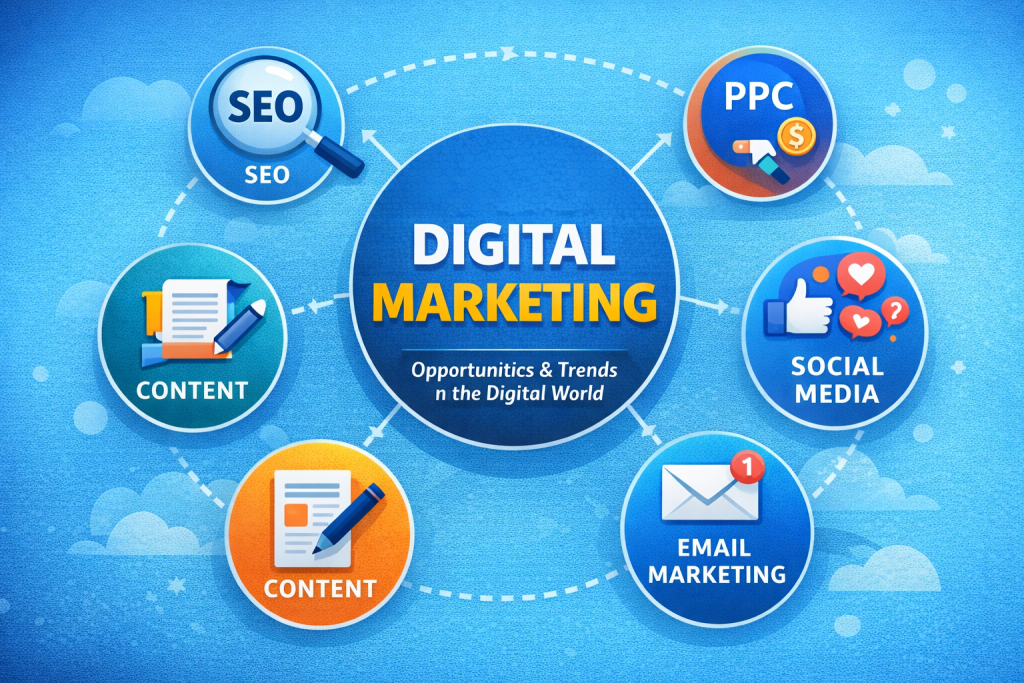
Digital Marketing is the set of online strategies and tactics used to reach, engage, and convert customers. It covers everything from search engine optimization (SEO) and paid advertising to content creation, social media, email campaigns, and analytics-driven optimization.
The Big Picture: Why the Scope Keeps Expanding
- Ubiquitous internet usage — more touchpoints mean more marketing channels.
- Data availability — marketers can measure performance in real time.
- Platform evolution — new formats (short video, live streaming, in-app commerce) keep emerging.
- Low entry cost — startups and freelancers can compete with small budgets if they use data-driven tactics.
Key Channels in Digital Marketing (Overview)
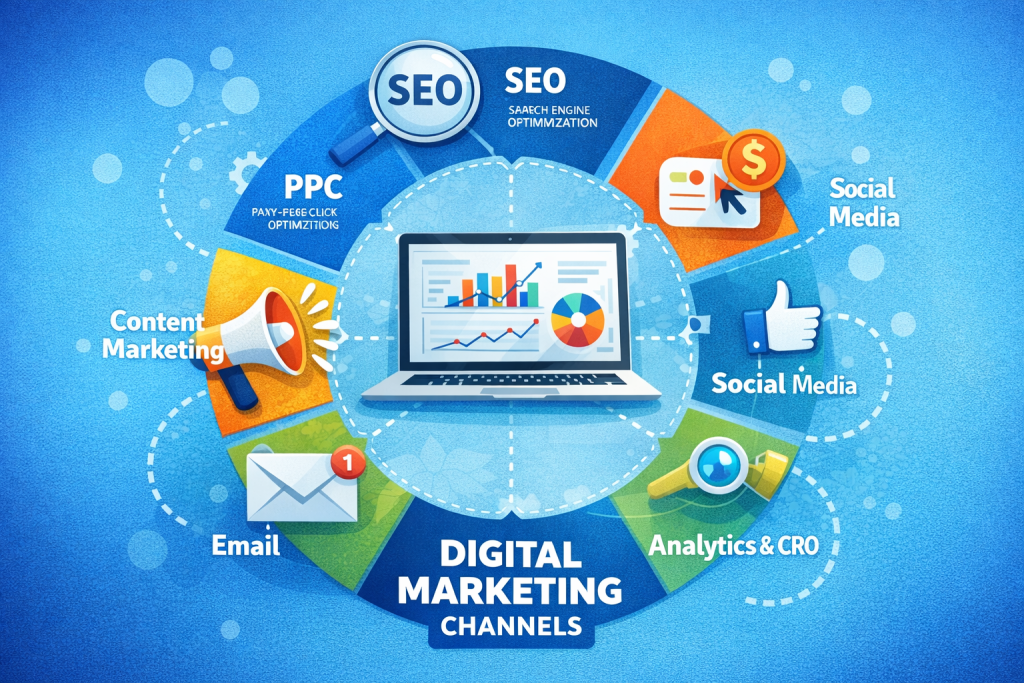
Below are the major channels you must understand and how they contribute to business goals.
## Search Engine Optimization (SEO)
SEO drives organic traffic from search engines. It includes on-page SEO (content, headings, technical structure), off-page SEO (backlinks), and technical SEO (site speed, mobile-friendliness). SEO is long-term but fuels sustainable organic growth.
## Pay-Per-Click Advertising (PPC)
PPC (search and display ads) gives immediate visibility. Campaigns on search engines or ad networks let you target intent-driven queries and scale performance quickly.
## Content Marketing
Content marketing creates value (articles, guides, video) to attract and educate audiences. Great content builds authority, improves SEO, and feeds social and email channels.
## Social Media Marketing
Social media builds brand awareness, community, and direct response. Different platforms suit different goals — brand-building vs. direct conversions.
## Email Marketing
Email remains one of the highest-ROI channels for retention and relationship-building. It’s ideal for nurturing leads and turning one-time buyers into repeat customers.
## Affiliate & Partner Marketing
Leverage third-party creators and publishers to expand reach on a performance basis. It’s highly scalable when managed well.
## Influencer Marketing
Partner with creators to tap into their audience trust. Micro-influencers often produce cost-effective engagement for niche markets.
## Analytics & CRO (Conversion Rate Optimization)
Everything in digital marketing must be measurable. Analytics plus CRO helps you test and improve landing pages, funnels, and ad creatives to maximize conversions.
## Where Businesses Use Digital Marketing (Tactical Examples)
- Ecommerce: product feed ads, remarketing, and email flows.
- B2B SaaS: content marketing, account-based marketing (ABM), LinkedIn outreach.
- Local businesses: local SEO, Google Business Profile, hyperlocal ads.
- Personal brands: YouTube series, newsletters, and online communities.
## Platforms & Tools (Where the Work Gets Done)
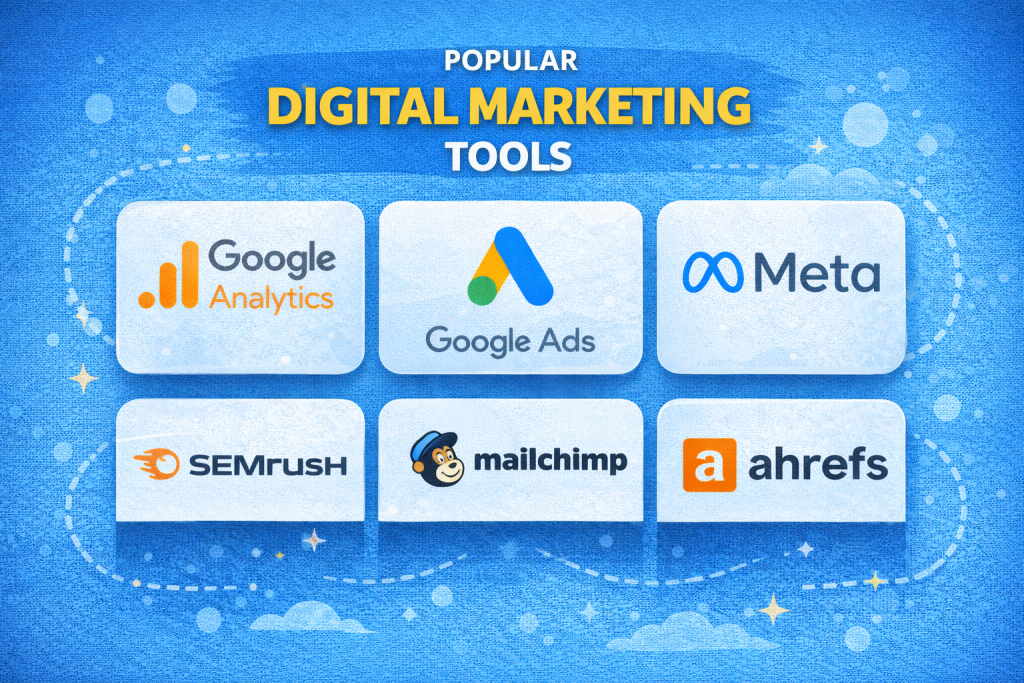
Popular platforms and tools fuel different parts of the stack. Examples include: Google (search & ads), Facebook (Meta ads / social), Instagram (visual engagement), YouTube (video content & ads), LinkedIn (B2B), and TikTok (short video reach). For automation and inbound strategy, solutions like HubSpot are common.
## Digital Marketing -Skills & Roles
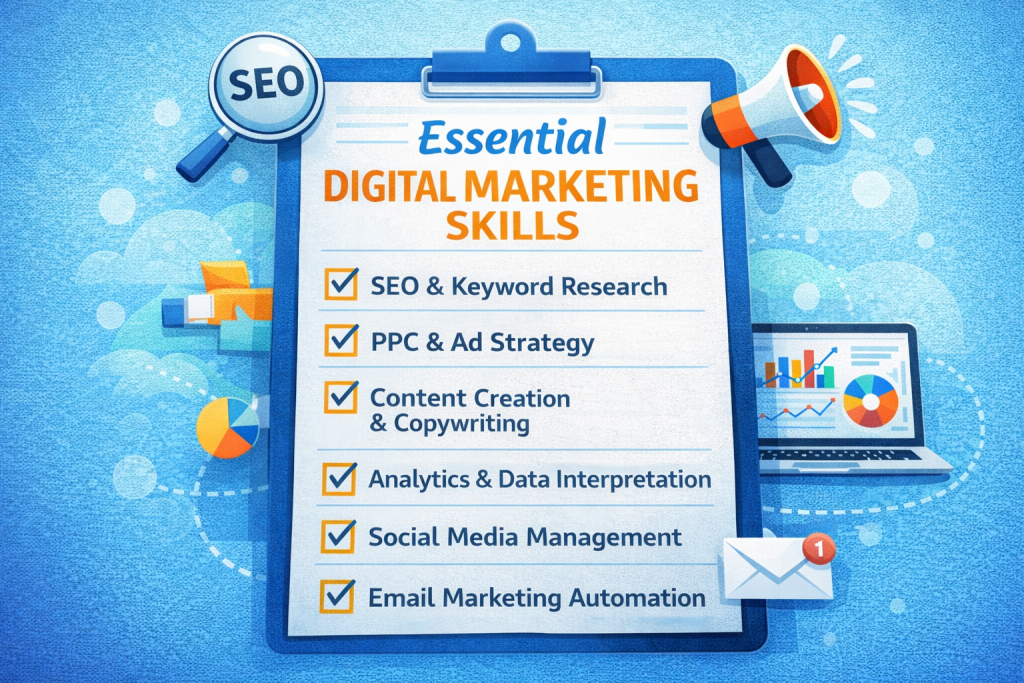
The field offers diverse roles — some technical, some creative:
- SEO Specialist (keyword research, link building)
- PPC/SEM Manager (ad strategy, bidding)
- Content Strategist & Copywriter (blogs, guides, scripts)
- Social Media Manager (community, content scheduling)
- Email Marketer (automation, segmentation)
- Analytics & Data Analyst (dashboarding, attribution)
- Growth Marketer (experimentation, funnels)
- UX/CRO Specialist (A/B testing, user flows)
Employers look for a mix of technical tools, analytical thinking, and storytelling ability.
## Education & Entry Paths
Digital marketing is highly learnable:
- Free resources: blogs, YouTube tutorials, community forums
- Paid courses and certifications (platform certificates can help)
- Internships and micro-projects (build case studies)
- Freelance gigs (start small, scale with reviews)
Practical experience (campaigns, measuring results) beats theory in hiring decisions.
## How to Build a Digital Marketing Strategy (Step-by-Step)
- Set measurable goals (traffic, leads, revenue).
- Define your audience (personas, channels they use).
- Audit existing assets (website, content, data).
- Choose channels based on goals (e.g., SEO + email for long-term leads).
- Create an editorial & campaign calendar.
- Implement tracking (UTMs, analytics, conversion pixels).
- Run experiments (A/B tests on landing pages and ads).
- Scale what works and iteratively improve.
## Measuring Success: KPIs & Attribution
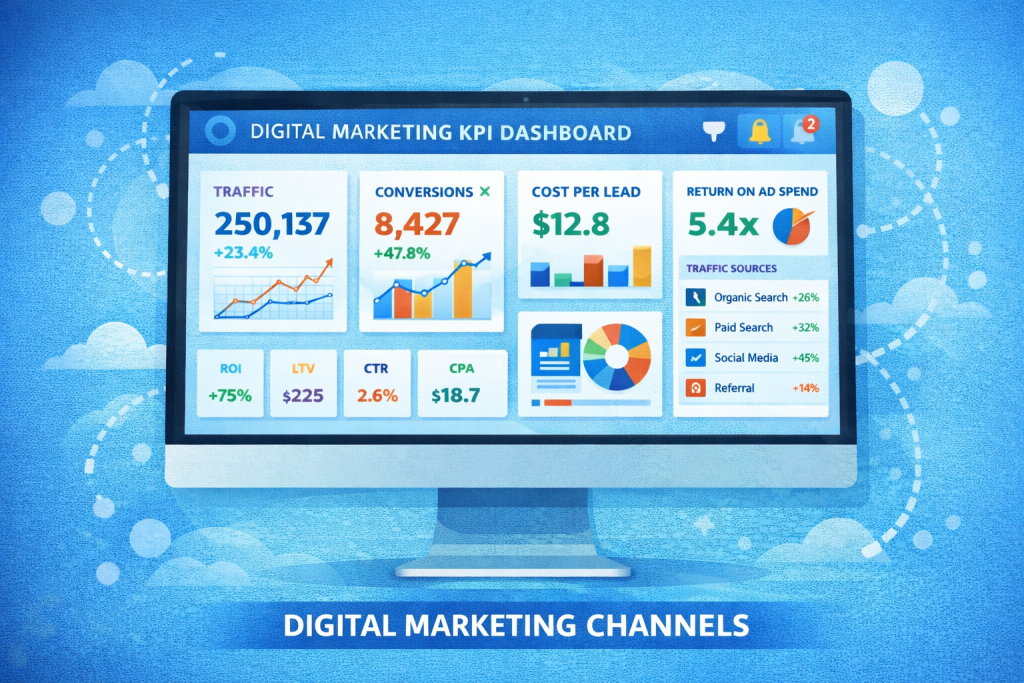
Key KPIs differ by goal:
- Awareness: impressions, reach, engagement
- Consideration: sessions, time-on-site, pages per session
- Conversion: leads, purchases, CPA (cost per acquisition)
- Retention: repeat purchase rate, churn, LTV (customer lifetime value)
Attribution models (last click, linear, data-driven) influence how you credit channels for conversions — choose what fits your business and test.
## Digital Marketing – Career Paths & Income Potential
Digital marketing can be a freelance career, agency role, or in-house position. Senior roles (Head of Growth, CMO) command high salaries; freelancers can scale earnings via retainer clients or performance-based deals. The demand is global — businesses of all sizes need digital marketers.
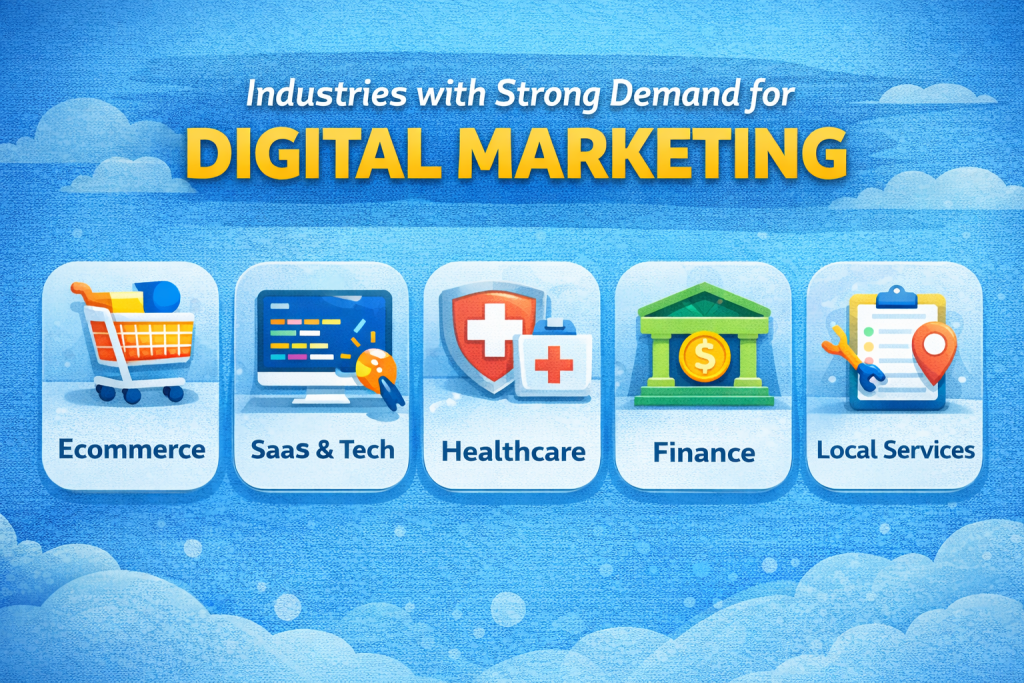
## Industry Verticals with Strong Demand
- Ecommerce & D2C brands
- SaaS & Tech
- Healthcare & EdTech (with compliance considerations)
- Finance & FinTech (higher barriers)
- Local services & franchises
Each vertical has unique channel mixes — e.g., ecommerce uses heavy retargeting and product feeds, B2B leans on LinkedIn and content.
## Trends Shaping the Future of Digital Marketing
- AI & automation — content generation, predictive analytics, ad optimization.
- Short-form video dominance — the rise of short clips and stories.
- Privacy & cookieless tracking — first-party data and server-side analytics.
- Conversational marketing — chatbots and in-app support.
- Commerce-enabled platforms — social commerce and in-platform checkouts.
Adapting to these trends is critical for staying relevant.
## Tools Checklist (Quick Starter Kit)
- Analytics: Google Analytics / GA4
- SEO: Keyword research and rank tracking tools
- Ads: Platform ad managers (search & social)
- Email: Automation platform (mailing + flows)
- Content: CMS (WordPress / headless CMS)
- Collaboration: Project and asset management tools
## Common Challenges & How to Overcome Them
- Attribution confusion: set up proper tracking and use multi-touch insights.
- Budget limits: prioritize low-cost, high-impact channels (SEO + email).
- Content fatigue: repurpose high-performing assets across channels.
- Keeping up with changes: follow trusted blogs and test in small experiments.
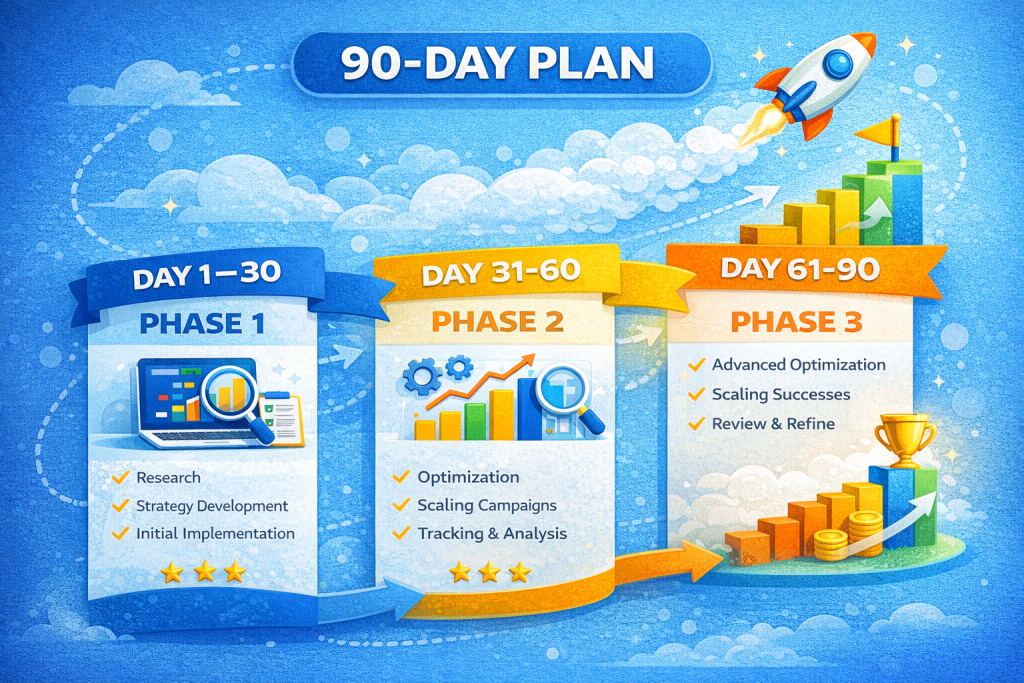
## How Beginners Can Start (Actionable 90-day Plan)
Days 1–30: Learn basics (SEO, Google Ads, social fundamentals); set up a simple website or portfolio.
Days 31–60: Run your first campaign (small ad spend), publish 4–6 pieces of high-value content, build email list.
Days 61–90: Analyze results, optimize, pitch first freelance or agency role, and document wins as case studies.
Consistency + measurement = growth.
## Ethics & Privacy: What Marketers Must Know
- Respect user privacy and regional laws (e.g., cookie consent).
- Be transparent with data usage.
- Avoid manipulative tactics that damage brand trust.
Ethical marketing builds sustainable businesses.

## Final Thoughts & Action Steps
Scope of Digital Marketing is broad and constantly evolving — which makes it both exciting and demanding. Whether you’re a beginner aiming for your first campaign, a business owner building growth channels, or an experienced marketer scaling teams, the rules remain the same:
- Focus on measurable goals.
- Prioritize channels that align with your audience and budget.
- Test, measure, iterate.
- Build skills in both strategy and tools.

Start small, document every win, and scale what works.
Recommended Reading
If you haven’t already, check out our detailed guide on Top 5 Freelancing Websites for Beginners to find the best platform to showcase your new portfolio and start landing clients faster.
🔗 Read it here: [Top 5 Freelancing Websites for Beginners ]